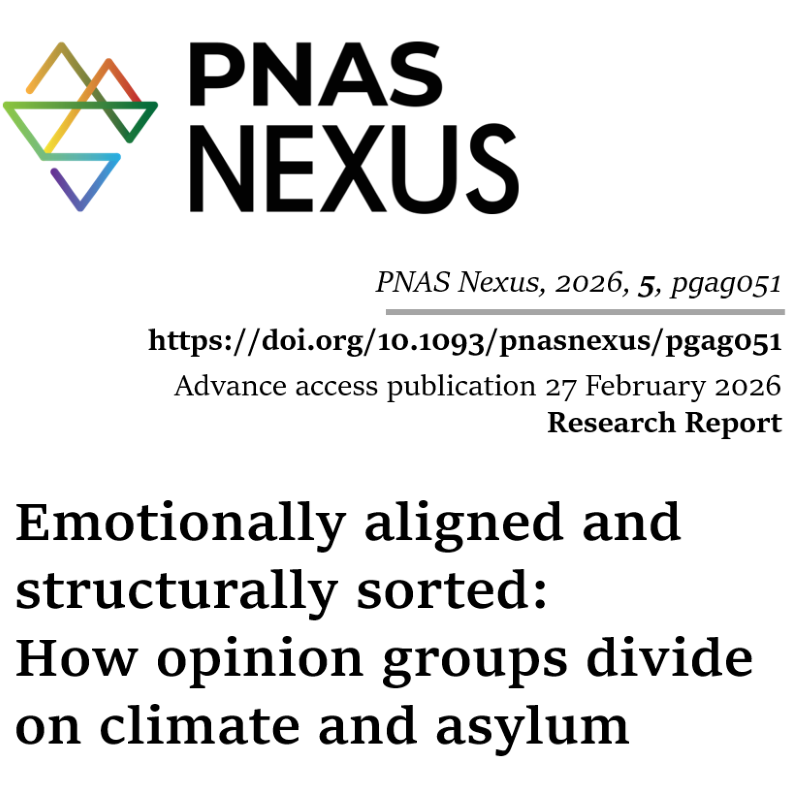
The study by Diego Dametto, Stefanie Hechler, and Christian von Scheve analyzed the emotional reactions of more than 5,500 people in Germany. It was based on a non-representative sample survey conducted prior to the 2021 federal election, which was recruited via social media.
Political polarization is not only caused by differing opinions — emotions also play a central role. Particularly on the issues of climate change and asylum policy, there are clearly defined political opinion groups in Germany, whose members not only hold similar positions but also share similar emotions.
In the study, the research team identifies several mechanisms that reinforce political division:
Emotional agreement within groups
Members of highly polarized opinion groups perceive their feelings as particularly similar. Negative emotions such as anger, disgust, or contempt dominate toward those who think differently, while joy is more frequently felt toward one’s own group.
Emotions as a driver of group formation
The perceived agreement of feelings strengthens the sense of unity within political camps and reinforces the distinction from other groups. Emotional perceptions thus contribute significantly to the dynamics of social polarization.
Social sorting of political camps
Polarized opinion groups also differ socially—for example, in terms of age, education, income, or place of residence. At the same time, political and social networks are increasingly overlapping, making contact with people with different political views less common.
Differences in political engagement
People with more progressive views are more likely to participate in collective forms of protest. People with more conservative views, on the other hand, are more likely to discuss politics – even with more distant social contacts, such as at work.
Overall, the researchers see this as a dynamic in which emotional perceptions, social networks, and political behavior reinforce each other. “Shaping your circle of friends exclusively along your own political identity can convey a sense of belonging, but it often comes with the risk of encountering other political groups with negative feelings,” says Diego Dametto. In the long term, this could hinder democratic processes of understanding.
The study was published in the journal PNAS Nexus. You can find the link to the study here.
Recommended citation:
Dametto, D., Hechler, S., & Von Scheve, C. (2026). Emotionally aligned and structurally sorted: How opinion groups divide on climate and asylum. PNAS Nexus, pgag051. https://doi.org/10.1093/pnasnexus/pgag051