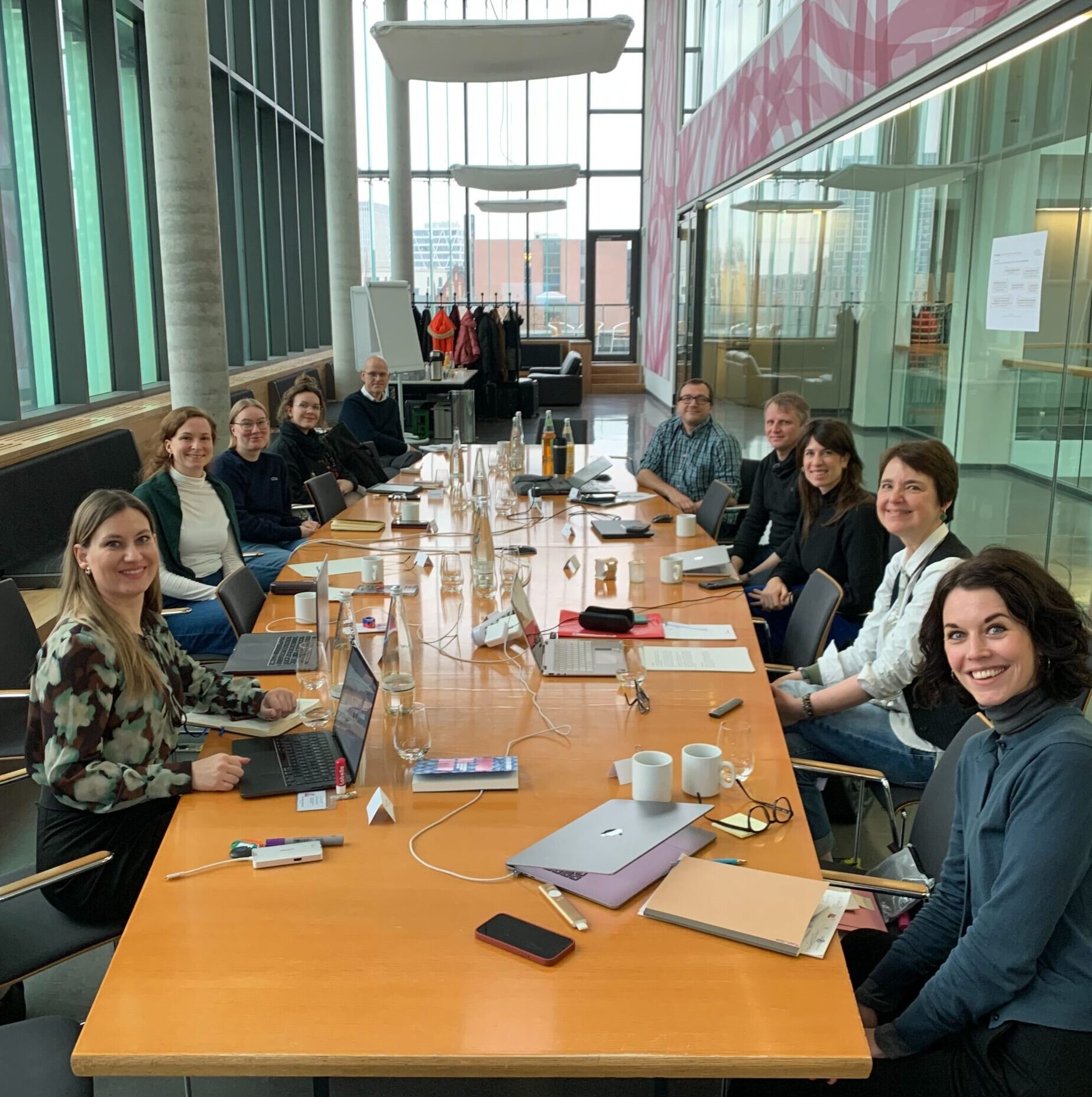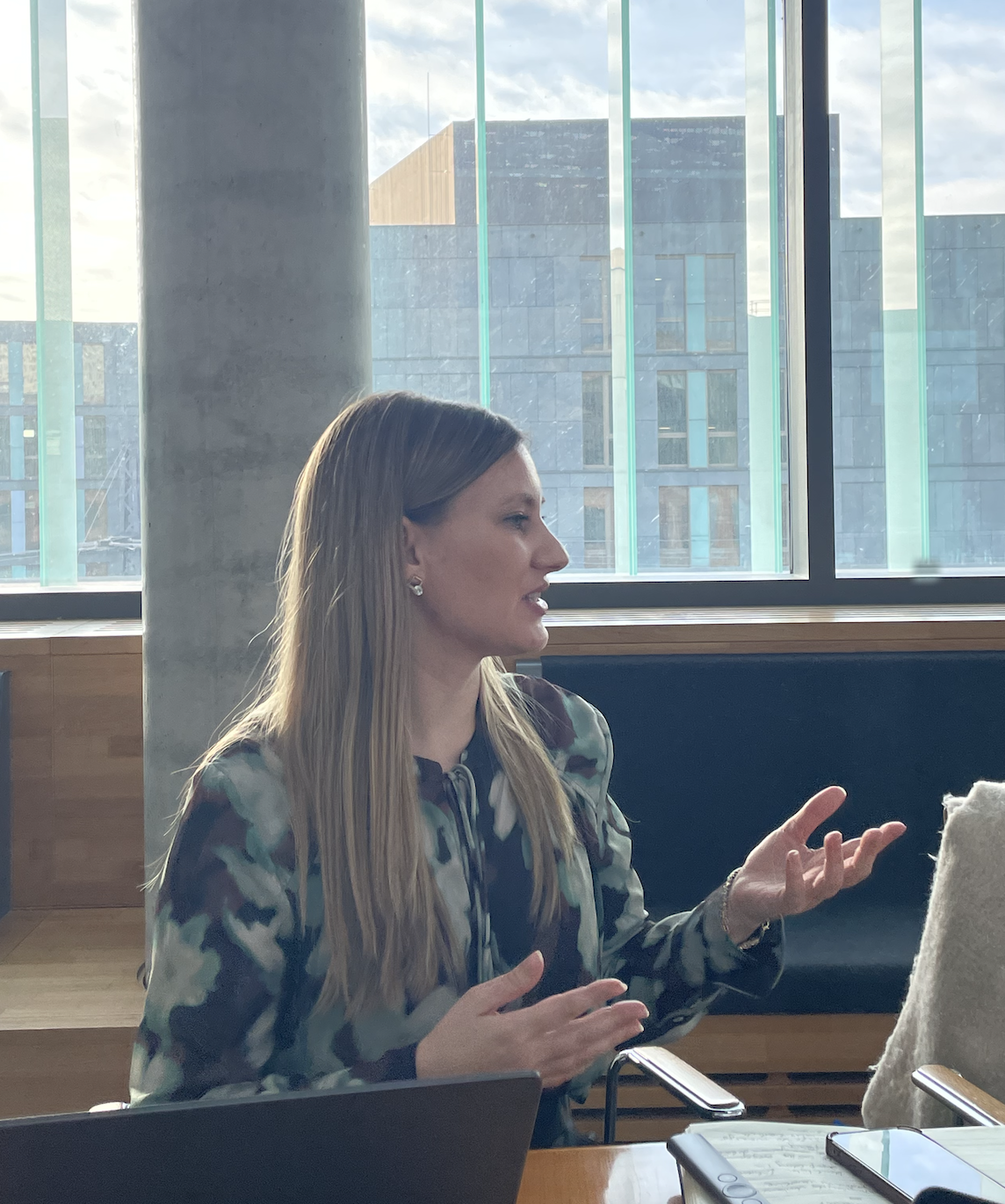
We thank all participants from research, journalism, and civil society organizations — including More in Common, Das Progressive Zentrum, Dpart, MAGNET – Werkstatt für Verständigung, and the Bertelsmann Stiftung — for their engaged and thoughtful contributions.
Our guest speaker Sigrun Rottmann opened the event by sharing insights from her journalistic practice (e.g., at the BBC) as well as from her work at the TU Dortmund on conflict-sensitive reporting. She illustrated how editorial routines, attention-driven market logics, and structural pressures shape media representation — and what possibilities remain for mitigating instead of reinforcing polarizing dynamics. The subsequent discussion highlighted the challenges inherent in collaboration between media, academia, and civil society: that is, for instance, balancing the need for precise, evidence-based communication with the demand for accessible, compelling storylines, and recognizing the responsibility that comes with shaping public discourse.
In the second input, Dr. Rico Neumann offered an overview of current research on affective polarization in climate- and migration-related debates. His communication-science perspective shed light on how emotions, linguistic patterns, and digital publics influence contested political and social issues.
In two workshop phases, participants worked on translating insights into practical applications. Among the guiding questions were:
– What role does conflict-sensitive communication play in journalism, research, and civil society?
– Which competencies does it require — and what does this mean for designing targeted interventions?
– Which structures support sustainable, dialogue-oriented processes?
The discussion made visible both potentials and tensions — for instance, between publication pressures and differentiated reporting, or between taking a clear stance and ensuring the representation of diverse perspectives. A central theme was how to create spaced in polarized debates to engage with one another as individuals with distinct experiences and emotions — going beyond “us vs. them” thinking and labelling.
Our Roundtable demonstrated the value of a shared forum for reflecting on and advancing conflict-sensitive communication as part of broader strategies to address the negative consequences of affective polarization. Common concerns, goals, and ideas emerged across professional boundaries, underscoring the importance of collaboration between different fields of expertise.
We thank all participants and look forward to continuing this work in the coming year!